When: 10/17/2026 · Where: Barra da Lagoa, Florianópolis – SC
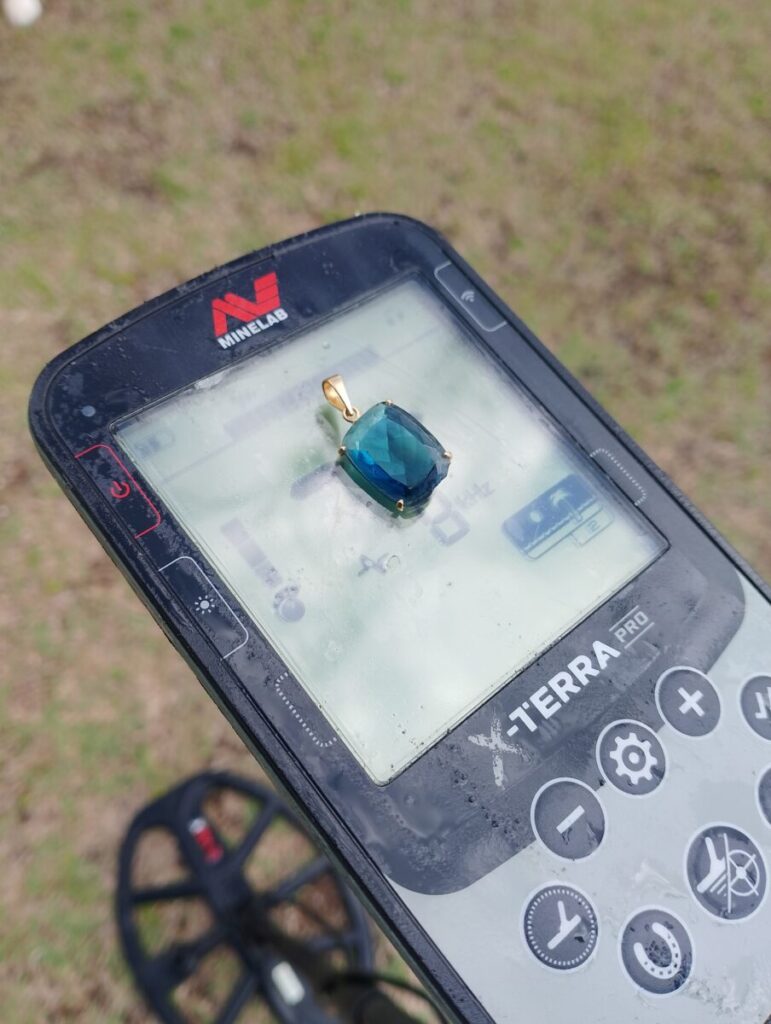
A client lost their gold pendant with a blue stone while disembarking from a jet ski in front of the food area of the Ponta das Caranhas restaurant, at Barra da Lagoa, Florianópolis. The location has shallow waters, about 50 cm deep, which facilitated the search.
When called, I went to the site and began the search with the metal detector. The area was calm and visibility in the water was reasonable. With patience, I passed the detector over the region where the client believed they had lost the jewelry. In less than an hour, I was able to locate the pendant, which was hidden on the bottom.
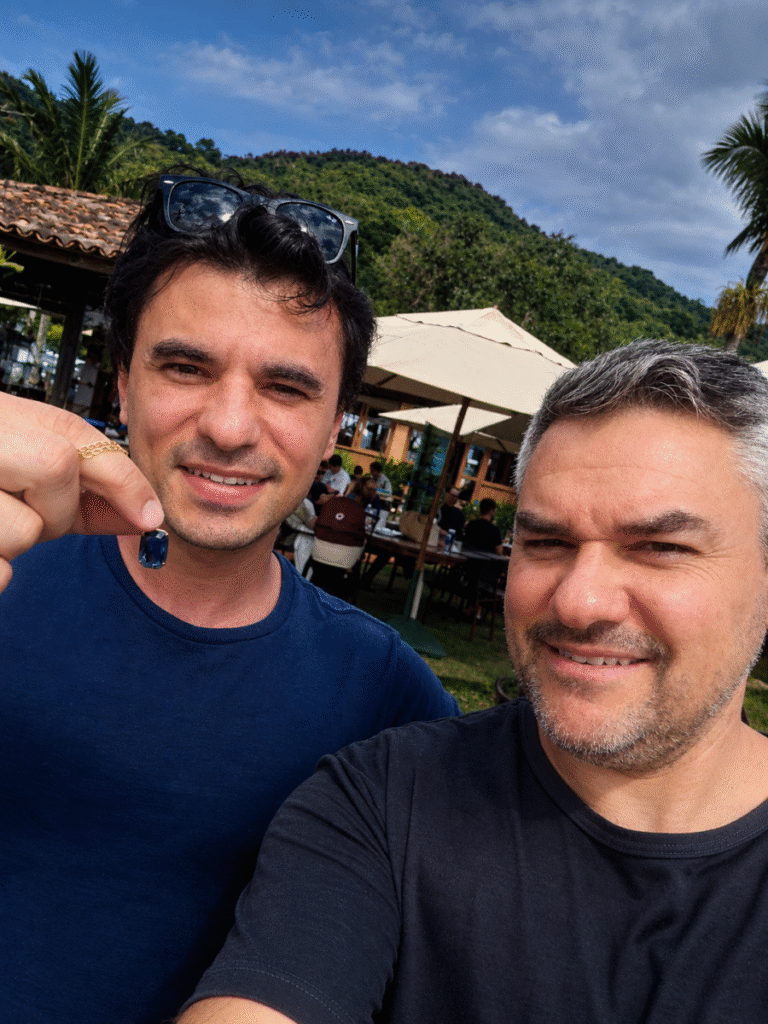
The recovery was a success and the client was very satisfied to receive their jewelry back. If you have lost something in the area, do not hesitate to call an Accredited Detectorist. Using a metal detector can increase your chances of recovering valuable items lost in the sand or water. Each case is unique: a pendant usually has more metal mass than a thin chain and, therefore, tends to respond better, but this does not guarantee results in another search. See the technical limitations of the service and the guide on chains, necklaces, and bracelets.
Related questions and answers
The tide rose after I lost it. Is it still possible to find it?
It is possible to try. The tide shifts and covers the area, and the search is usually done when it goes down. The chances decrease over time and with strong waves. Read the full answer in the guide.
I lost something just now. What is the next step?
Mark the spot, do not touch the area, and request recovery through the site’s radar. Every minute counts. Read the full answer in the guide.
More answers in the complete guide: how to search for a lost ring or jewelry.

 Recovery made by Edenilton, Accredited Detectorist of Dr. Detector in Palhoça – SC. View Edenilton’s profile and request a recovery
Passo a passo imediato: perdeu uma joia na praia ou na água?
Faça isto agora, nesta ordem, antes de procurar por conta própria:
- Pare e marque o ponto: isole a área onde o objeto deve ter caído e fotografe referências fixas ao redor (poste, quiosque, posto de guarda-vidas, pedra, árvore).
- Não cave e não deixe muita gente pisar ou revirar a areia: isso afunda e espalha o objeto e atrapalha o detector.
- Anote o horário da perda e se foi na areia seca, na areia molhada ou na água: a maré muda o terreno em poucas horas.
- Chame logo um detectorista profissional credenciado da rede Dr. Detector na sua região: quanto antes a busca começa, maiores as chances (sem garantia de resultado). Pedir um detectorista agora.
Em Florianópolis? Veja as praias atendidas em Florianópolis e como pedir o resgate.